
Product Specifications
- Format
- Lyophilized copper peptide
- Quantity
- 50 MG
- Use Classification
- Research Use Only
- Authentication
- Serial + QR verified
- Traceability
- Batch-linked
- Certificate of Analysis
- Available on request
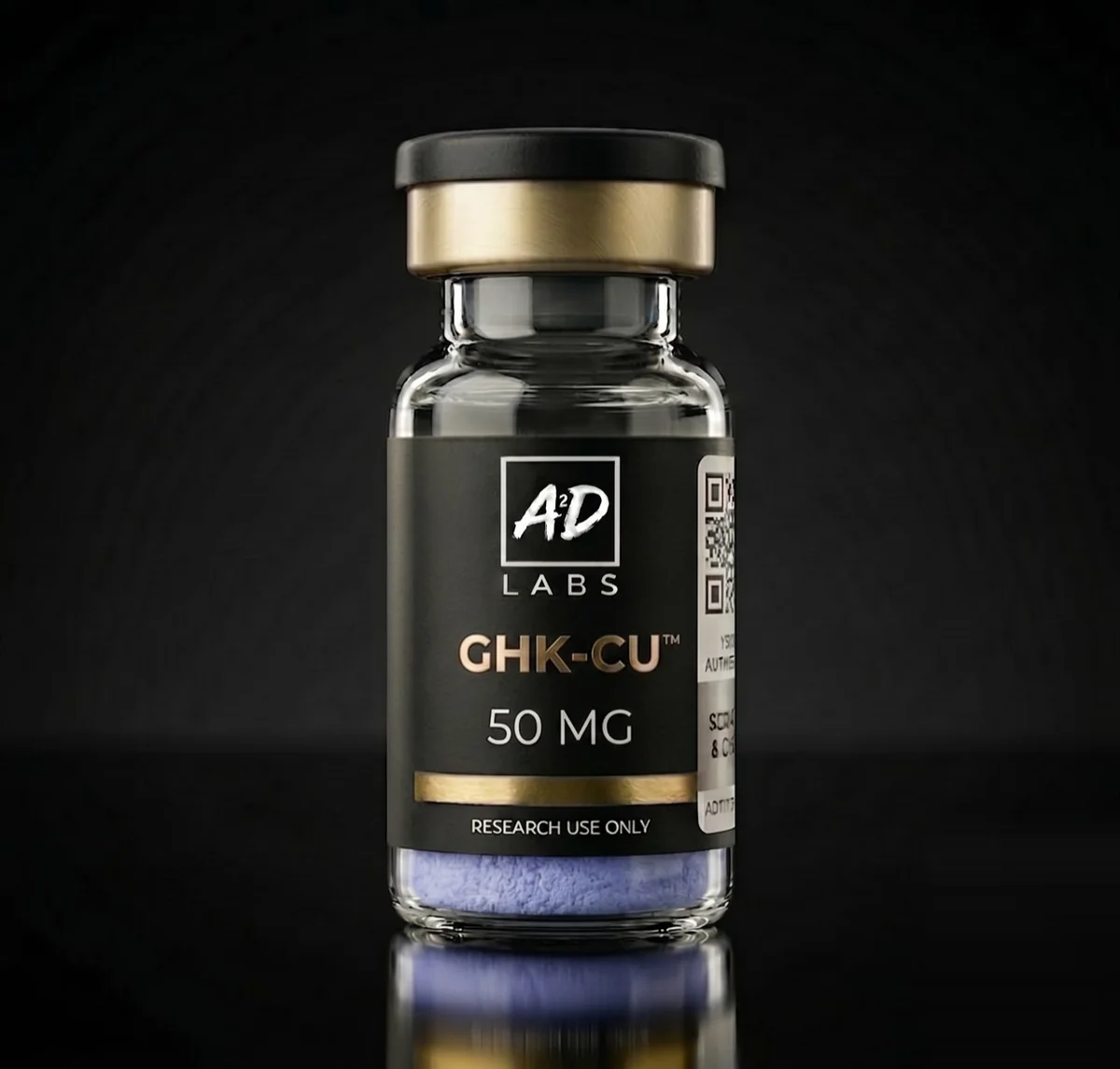
50 MG Copper Peptide Research Compound
GHK-CU™ is a premium copper-peptide research compound presented through the A²D Labs authentication ecosystem, combining identity verification, batch traceability, and documentation-focused product standards.
GHK-CU™ belongs to a category of copper-binding peptides that have been extensively discussed within biological research literature.
Researchers have explored this category in connection with tissue remodeling, cellular signaling, gene-expression research, oxidative-stress pathways, and broader biological maintenance systems.
Its distinctive blue-violet appearance makes GHK-CU one of the most visually recognizable compounds in peptide research.
Scientific literature commonly discusses:
Every GHK-CU™ unit includes:
Research Use Only.
Not for human consumption.
Not intended to diagnose, treat, cure, or prevent disease.
GHK-CU™ is a copper-peptide research compound positioned within cellular signaling and biological maintenance research.
Copper-peptide compounds are commonly associated with blue-violet coloration, making them visually distinctive within research environments.
Published literature commonly discusses copper-peptide biology, cellular signaling, gene expression, and tissue-remodeling pathways.